O U R F R A M E W O R K
The L.A.M.B. Method
Mediation should feel human. Let's settle your beef with the L.A.M.B. Method here at The Truce Room. We pride ourselves on our trauma-aware, inclusive, humanity-first approach to conflict resolution.
Listed below, we explain what it stands for, the science and research behind it, and why we chose our logo/mascot.
L E T ’ S E X P L A I N
The L.A.M.B. Method
Listening with Love
We create space for every voice to be heard fully and respectfully. No attitude. No interrupting. Just witnessing—because listening comes before fixing, defending, or deciding. Understanding is the foundation of resolution.
Accountability & Acceptance
We focus on owning impact vs. intent. Accept what reality is—so real repair can happen, without shame spirals or blame games. It's about honesty, repair, and acceptance so progress can actually begin.
Mediation through Mindfulness
Emotions happen—so we help pump the brakes. Nobody can think clearly when they're big mad. Conflict dysregulates the nervous system. We slow the process, ground emotions, and encourage clarity so decisions are made thoughtfully, not reactively.
Breaking Cycles & Building Trust
Name the patterns, interrupt them, and replace them with healthier agreements and behaviors. Rather than surface-level compromises, this step addresses recurring patterns and replaces them with workable systems. That's where long-term change sticks.
L E A R N
The Science as to why the L.A.M.B. Method is effective:
The L.A.M.B. Method is more than a compassionate philosophy. It is rooted in well-established principles from conflict resolution, psychology, mindfulness, communication, and mediation research. These fields consistently show that people are more likely to move toward resolution when they feel heard, treated fairly, emotionally regulated, and included in the process.
The L.A.M.B. Method works because it addresses the human realities underneath conflict:
People want to feel heard.
People respond better to fairness and respect.
People communicate better when they are emotionally regulated.
People are more likely to follow through on solutions they helped shape.
People build trust when patterns actually change.
That is why the L.A.M.B. Method is useful not only in formal mediation, but also in workplaces, families, partnerships, communities, and everyday life. It is a framework for conflict resolution, but it is also a framework for healthier human interaction.
-
Research shows that high-quality, empathic listening helps people feel more connected, less alone, and less defensive. In conflict, that matters because people are more likely to calm down and communicate honestly when they feel heard instead of judged or shut down. This directly supports the “Listening with Love” part of the L.A.M.B. Method
Feel free to read the research and studies below:
https://pmc.ncbi.nlm.nih.gov/articles/PMC10320710/
-
People are more cooperative when they feel respected, included, and treated fairly. Everyone makes better decisions when that basic need is met.
Procedural justice research shows that people respond better when they feel they had a voice, were treated with dignity and respect, and experienced neutrality and trustworthiness in the process. That lines up closely with the L.A.M.B. Method’s focus on accountability, acceptance, and trust-building.
One study on empathic paraphrasing found that it can help reduce negative emotional responses during social conflict. That matters in mediation because people usually solve problems better when the emotional temperature comes down.
Feel free to read the research and studies below:
https://pmc.ncbi.nlm.nih.gov/articles/PMC3495333/
-
Research links mindfulness with more constructive conflict resolution styles and better negotiation effectiveness.
In simple terms, people tend to make better choices when they are grounded enough to pause, reflect, and respond intentionally instead of reacting impulsively. That is the science underneath “Mediation through Mindfulness.” It works because it supports participation and problem-solving.
Court and dispute resolution research continues to support mediation as a useful process because it emphasizes self-determination, participation, and practical problem-solving.
Recent court system reporting also shows strong resolution outcomes in some mediation and settlement-assistance programs, including matters that were fully or partially resolved before further court action was needed.
Feel free to read the research and studies below:
https://pmc.ncbi.nlm.nih.gov/articles/PMC9709178/
https://pmc.ncbi.nlm.nih.gov/articles/PMC7303363/
https://pmc.ncbi.nlm.nih.gov/articles/PMC7274625/
https://www.ncsc.org/sites/default/files/media/document/NCSC-Trends-2025.pdf
https://www.ncsc.org/sites/default/files/media/document/EDI_Interim_Report_2024_3-18-25.pdf
-
Many conflicts are not caused by a single disagreement, but by repeated patterns such as avoidance, blame, mistrust, poor communication, or unresolved harm.
Research and mediation practice both support the idea that stronger outcomes happen when the deeper cycle is addressed, not just the surface argument.
That is why the L.A.M.B. Method focuses on breaking cycles and building trust rather than just forcing quick agreement. Stronger outcomes happen when we follow the L.A.M.B. Method.
-
The L.A.M.B. Method is a proprietary framework created by The Truce Room. While the method itself is unique to this practice, it is informed by widely recognized research in communication, mediation, mindfulness, conflict resolution, and trust-building.
We encourage you to use either our method or your own version to empower yourself to resolve any issue in your life.
The meaning behind our logo
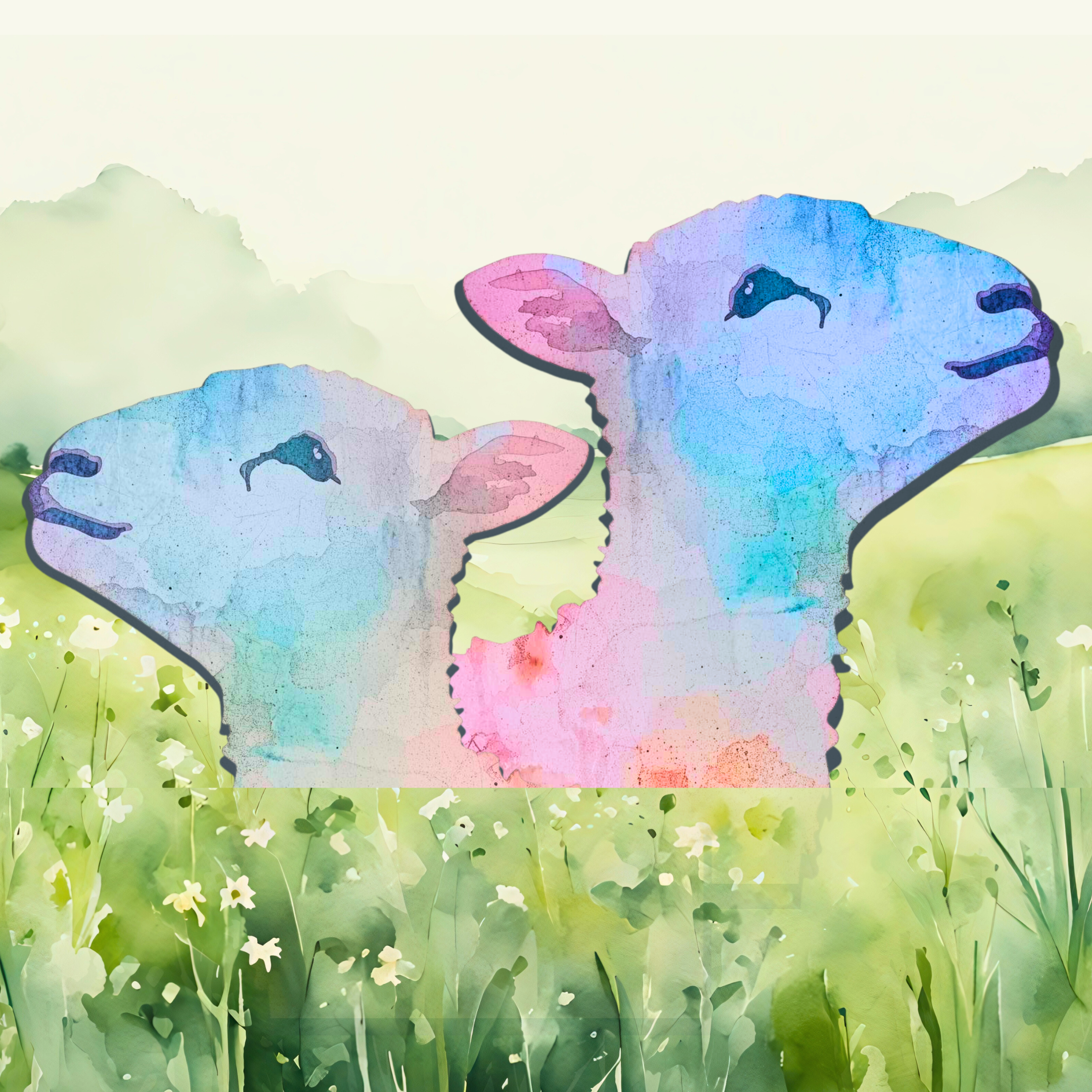
The Truce Room logo, brand, and website was entirely designed and created by our founder, Charlotte. Alongside Charlotte’s legal experience— she also has 15+ years of graphic design and web design experience.
The Truce Room logo represents gentleness in the midst of complexity. The two lambs share the same space, but they are not fully facing one another. This reflects a truth many people know well: during conflict, grief, or major life transitions, people can feel emotionally worlds apart even when standing side by side. Sometimes it feels that someone is above you and yet simultaneously, they feel that you’re above them. The logo honors that distance without judgment.
Its watercolor rainbow palette symbolizes the many emotions people carry through conflict and change. Anger, sorrow, confusion, tenderness, relief, fear, hope, and healing are rarely separate from one another — they overlap, blend, and shift. The colors were chosen to reflect that emotional spectrum and to remind people that their feelings do not make them broken; they make them human.
The lambs’ soft expressions are a symbol of reassurance. Even when life feels heavy, people can still walk away with something meaningful: new tools, new understanding, new support, and a renewed sense that moving forward is possible. That is the spirit behind The Truce Room — not pretending conflict is easy, but helping people face it with more clarity, care, and confidence. It’s truly growth after a storm.
Crisis & Immediate Support